

Products Description
| Company Information | |||
| [email protected] | |||
| Mobile | +8613950166376 | ||
| +8613950166376 | |||
| 13950166376 |
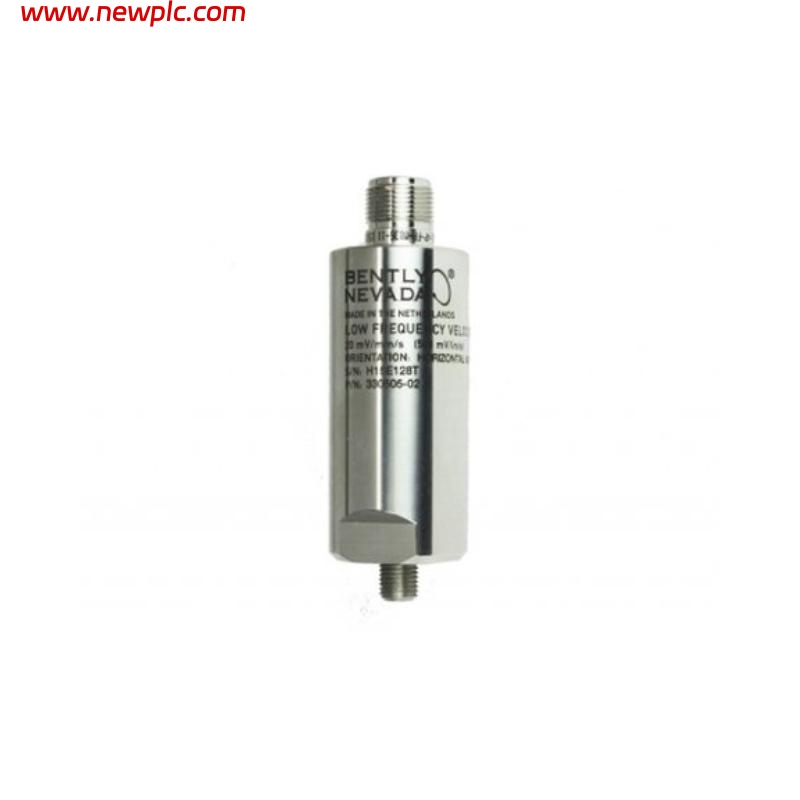
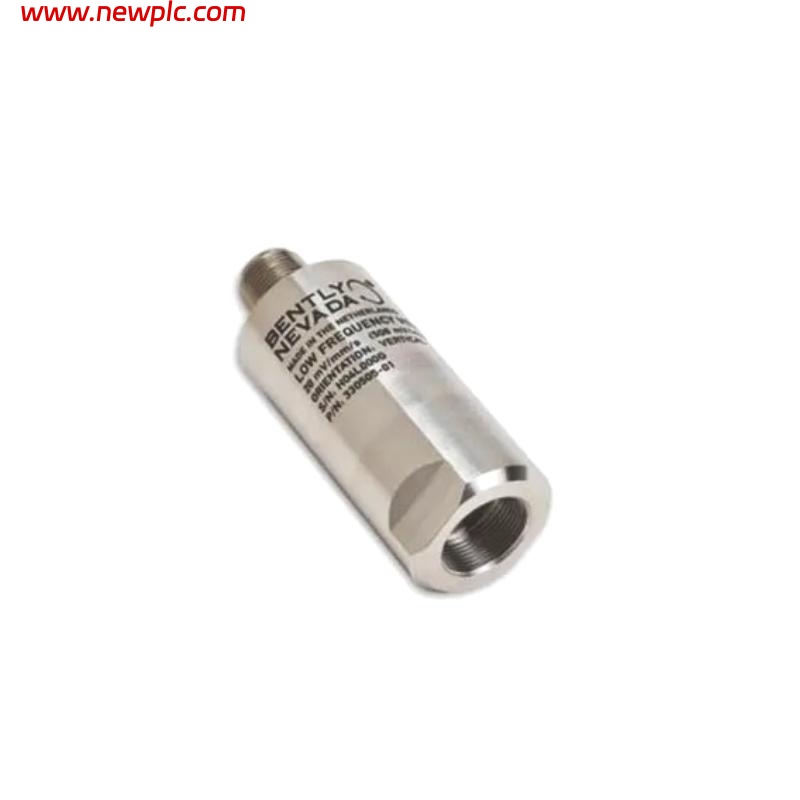
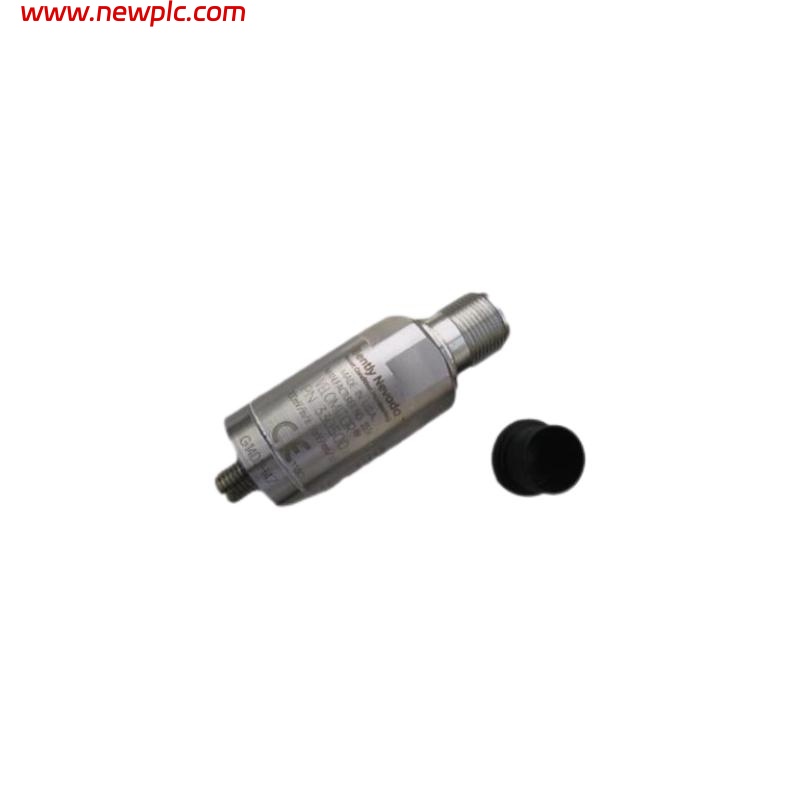
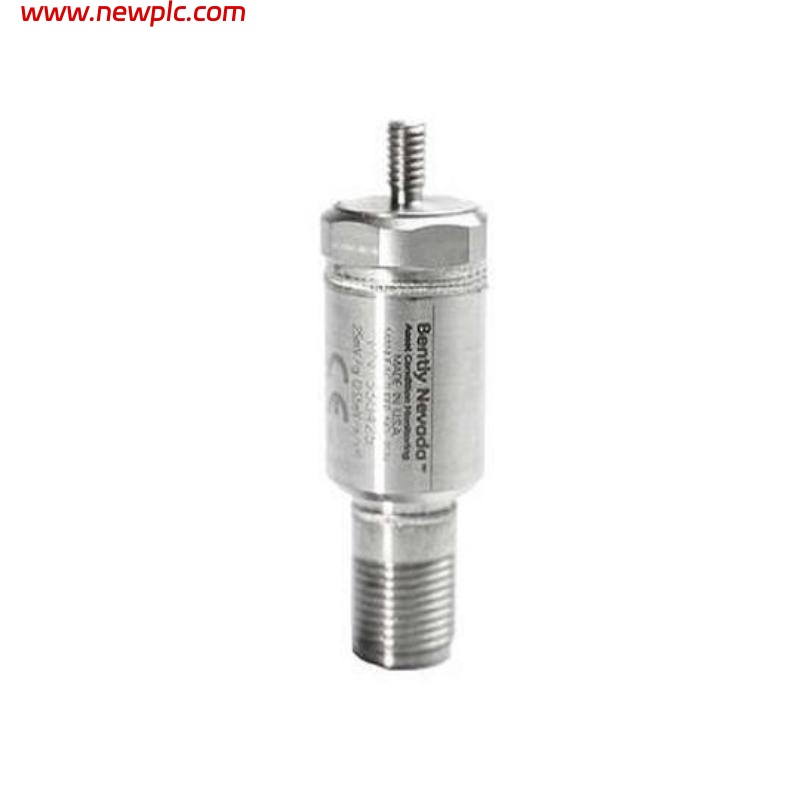
Manufacturer:Bently Nevada
Product Number:89411-01
Product Type:Magnetic Tachometer / Speed Sensor
Origin:USA
Dimensions:35 mm diameter × 60–70 mm length
Weight :0.15 kg
FAQ
FAQ
Q1: What is the Bently Nevada 89411‑01 used for?
A1: It is a magnetic pickup speed sensor used to detect the rotation of a ferrous target such as a shaft, gear, or reluctor wheel and generate AC voltage pulses for speed or phase measurement.
Q2: How does this magnetic pickup work?
A2: It uses an inductive principle: as a ferrous object passes near the sensor tip, it induces voltage spikes in the sensor coil proportional to the relative speed and target characteristics.
Q3: Does the 89411‑01 require external power?
A3: No — it is a passive sensor that generates its own AC output signal when a ferrous target moves past the sensor tip.
Q4: What type of output signal does it provide?
A4: It provides AC voltage pulses whose frequency corresponds to the rotational speed of the machine and whose amplitude depends on the speed and geometry of the target.
Q5: What environments is this sensor suitable for?
A5: It is suitable for rugged industrial environments where rotating machinery speed and phase reference signals are needed.
Q6: What is the typical operating temperature range?
A6: The sensor can operate in industrial environments from about −40 °C to +120 °C.
Q7: How is this sensor typically installed?
A7: It is mounted near a rotating ferrous target such that its tip faces the target with a small, controlled air gap for signal consistency.
Q8: Are additional components needed to use this sensor?
A8: Yes — the sensor’s output is typically connected to tachometer or monitoring electronics (e.g., PLC inputs, vibration analyzers) that interpret the frequency or speed information.
Tags
Packing & Delivery
We will use wear-resistant cartons to seal the boxes, and take photos for your confirmation before sealing. We will pack the boxes only after confirmation.
For express delivery, we will use DHL, UPS, TNT, FedEx and EMS.
Please rest assured that we have a deep cooperation with express delivery companies and can ensure that your goods are delivered to you in good condition.

