

Products Description
| Company Information | |||
| [email protected] | |||
| Mobile | +8613950166376 | ||
| +8613950166376 | |||
| 13950166376 |
Technical Specifications
|
Parameter |
Specification |
|---|---|
|
Manufacturer |
Allen-Bradley |
|
Model |
|
|
Product Type |
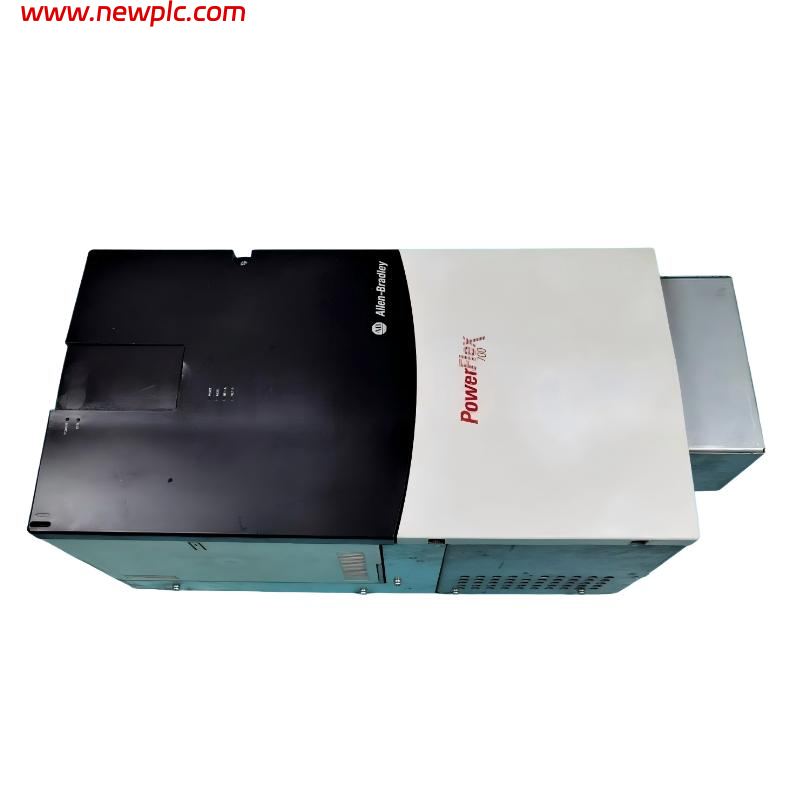
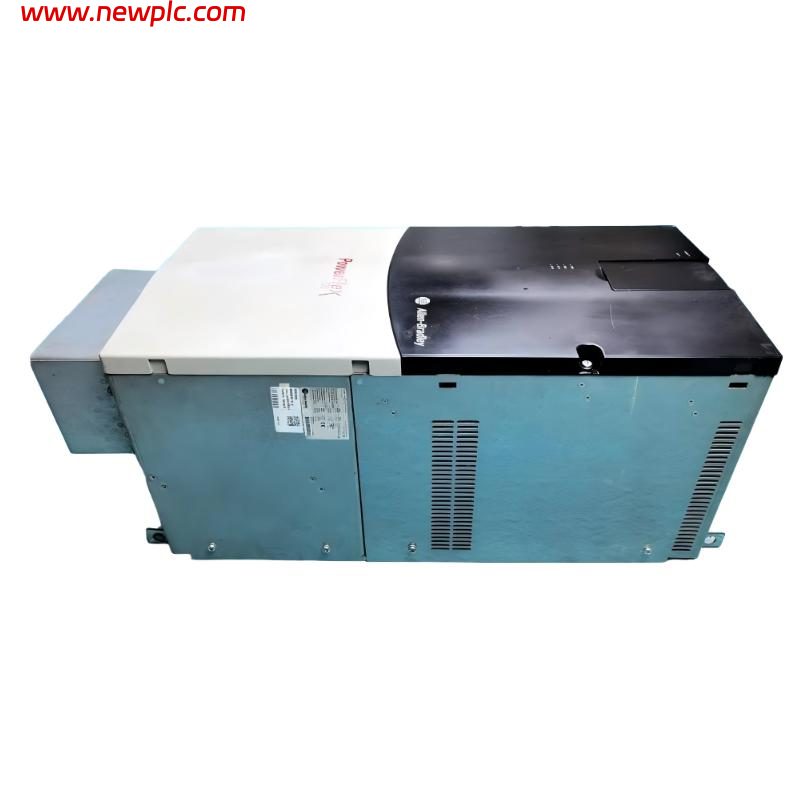
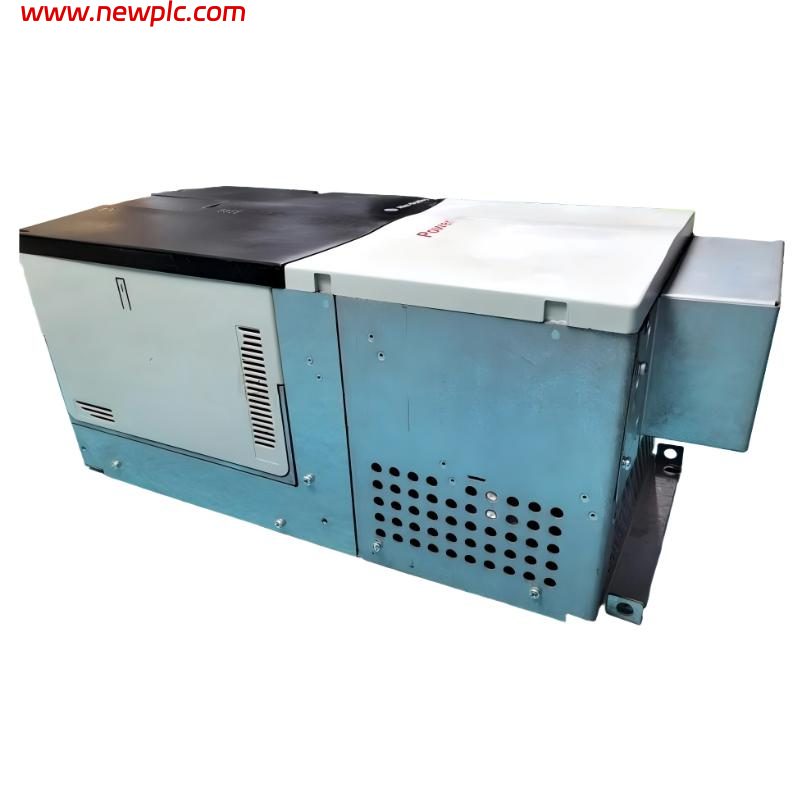
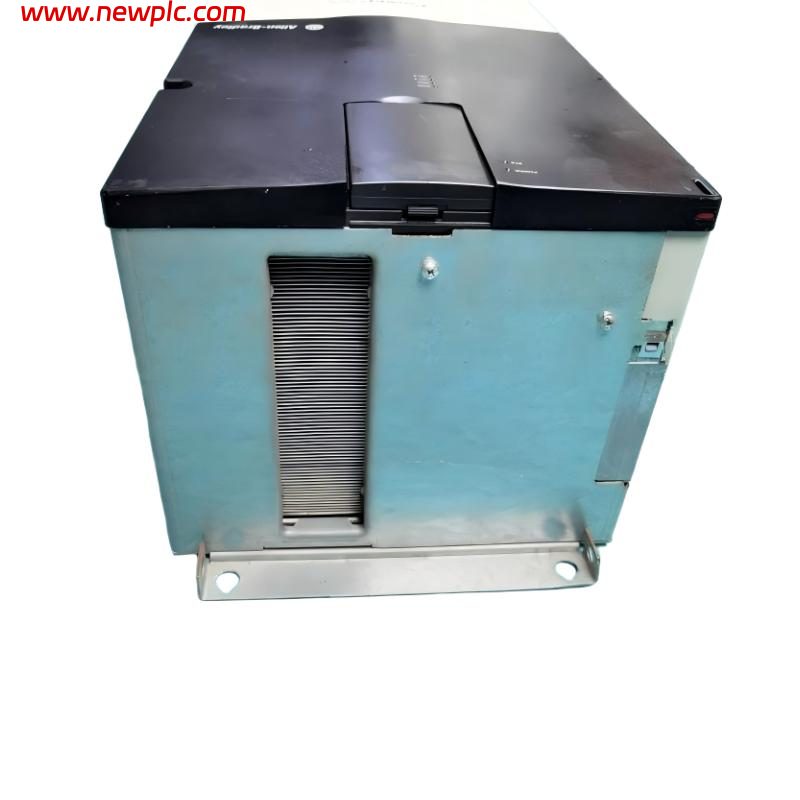
PowerFlex 700 AC Drive |
|
Input Voltage |
400 VAC |
|
Input Voltage Range |
380–480 VAC |
|
Input Phase |
3-phase |
|
Input Frequency |
50 Hz |
|
Rated Output Current |
205 A |
|
Normal-Duty Power Rating |
110 kW |
|
Heavy-Duty Power Rating |
90 kW |
|
Output Phase |
3-phase |
|
Output Voltage |
0 to rated motor voltage |
|
Maximum Output Frequency |
420 Hz |
|
Control Method |
Vector Control |
|
Control I/O |
24 V DC I/O |
|
Analog Inputs |
2 |
|
Analog Outputs |
2 |
|
Digital Inputs |
6 |
|
Digital Outputs |
3 |
|
Feedback |
No Feedback |
|
Communication Module |
EtherNet/IP DPI Module |
|
Human Interface Module |
LCD display with full numeric keypad and programming keys |
|
EMC Filter |
EMC filter with common-mode choke |
|
Brake IGBT |
Not included |
|
Internal Braking Resistor |
Not included |
|
Enclosure Rating |
IP20 / NEMA/UL Type 1 |
|
Frame Size |
Frame 6 |
|
PWM Frequency |
4 kHz at 400 VAC |
|
Efficiency |
Approximately 97.5% at rated current and nominal line voltage |
|
Displacement Power Factor |
Approximately 0.98 across the speed range |
|
Overload Capacity |
110% of rated current for up to 1 minute; 150% for up to 3 seconds |
|
Acceleration Time |
0–3600 s, programmable |
|
Deceleration Time |
0–3600 s, programmable |
|
Speed Regulation |
Approximately 0.1% of base speed in Vector Control without feedback |
|
Torque Regulation |
Approximately ±5% without feedback |
|
DC Bus Voltage |
Approximately 540 V DC at 380/400 VAC |
|
DC Bus Undervoltage Protection |
Approximately 305 V DC at 380/400 VAC |
|
DC Bus Overvoltage Protection |
Approximately 810 V DC at 380/400 VAC |
|
Maximum Altitude |
1000 m without derating |
|
Operating Temperature |
0–50 °C, depending on operating conditions |
|
Relative Humidity |
5–95%, non-condensing |
|
Short-Circuit Rating |
Up to 200,000 A symmetrical, depending on protection configuration |
|
Communication Protocol |
EtherNet/IP |
|
Motor Overload Protection |
Class 10 motor overload protection |
|
Stop Functions |
Coast, Ramp, DC Brake and programmable stopping functions |
|
Dimensions |
976.3 × 403.9 × 275.5 mm |
|
Weight |
71.44 kg |
|
Product Status |
Discontinued |
FAQ
FAQ
Q1: What applications are suitable for the Allen-Bradley 20BC205A3ANNANC0?
A: The Allen-Bradley 20BC205A3ANNANC0 is a high-power PowerFlex 700 AC Drive designed for controlling three-phase industrial motors. With a rated output current of 205 A, a normal-duty power rating of 110 kW, and a heavy-duty power rating of 90 kW, it is suitable for industrial machinery requiring controlled motor starting, stopping, speed regulation, and torque management.
Typical applications include conveyors, pumps, fans, material-handling equipment, mechanical transmission systems, and process machinery. Its Vector Control method supports improved motor response and speed regulation under changing load conditions.
When selecting this drive, evaluate the motor’s rated current, starting torque, load inertia, operating cycle, and overload requirements. The drive’s power rating alone is not sufficient to determine suitability for every application.
Q2: What type of power supply does the 20BC205A3ANNANC0 require?
A: This drive is designed for a three-phase AC supply within the 380–480 VAC range, with a nominal input voltage of 400 VAC and a listed input frequency of 50 Hz.
The installation requires an appropriately rated electrical distribution system, circuit protection, disconnecting equipment, correctly sized power cables, and protective grounding. The supply must be capable of supporting the motor and expected operating load.
Before energizing the drive, verify the input voltage, phase configuration, terminal connections, grounding, and protective devices. Ensure the incoming supply is connected to the designated input terminals and the motor is connected to the correct output terminals. Installation and commissioning should be performed by qualified personnel.
Q3: What control functions are available on the 20BC205A3ANNANC0?
A: The 20BC205A3ANNANC0 uses Vector Control and provides 24 V DC control I/O, including two analog inputs, two analog outputs, six digital inputs, and three digital outputs.
The drive supports programmable acceleration and deceleration times from 0 to 3600 seconds, allowing motor operation to be adjusted to the requirements of different machines. These settings can help manage starting current, load inertia, and mechanical stress during speed changes.
For reliable operation, configure the motor parameters according to the motor nameplate and application requirements. Incorrect motor data or unsuitable acceleration and deceleration settings can contribute to excessive current, unstable performance, and protective trips.
Q4: Can the 20BC205A3ANNANC0 operate without encoder feedback?
A: Yes. This configuration is specified as No Feedback, meaning that a standard encoder is not required for its configured motor-control operation. Its Vector Control system uses electrical measurements and internal control algorithms to regulate motor speed and torque.
The listed speed regulation is approximately 0.1% of base speed, with torque regulation of approximately ±5% without feedback. Actual results depend on motor characteristics, parameter settings, load conditions, and commissioning quality.
This configuration can be suitable for many conveyors, pumps, fans, and general-purpose industrial machines. Applications requiring precision positioning, extremely low-speed operation, or tightly controlled closed-loop speed accuracy may require an encoder-based solution. Confirm the application’s performance requirements before selecting the drive.
Q5: How should an overcurrent fault on the 20BC205A3ANNANC0 be diagnosed?
A: An overcurrent fault may be caused by excessive mechanical load, motor wiring problems, incorrect motor parameters, or acceleration settings that demand too much current.
Start by checking whether the driven machine is jammed or overloaded. Inspect bearings, gearboxes, couplings, conveyors, pumps, and other mechanical components for excessive friction or blockage. Then inspect the motor cables and terminals for damaged insulation, loose connections, short circuits, or incorrect wiring.
If the fault occurs mainly during acceleration, review the acceleration time. High-inertia loads may require a longer acceleration period. Also verify the motor’s rated voltage, current, frequency, and speed settings, along with the relevant Vector Control parameters and motor-tuning procedure.
If the fault persists after mechanical, wiring, and configuration checks, qualified technicians may need to inspect the drive’s power components and current-sensing circuitry. Always isolate the power supply and follow appropriate electrical-safety procedures before inspection.
Q6: Why can the 20BC205A3ANNANC0 trip on overvoltage during deceleration?
A: Overvoltage during deceleration commonly occurs when a motor returns regenerative energy to the drive’s DC bus. When a high-inertia load slows down rapidly, stored mechanical energy can raise the DC-bus voltage above the allowable limit and trigger a fault.
First, review the programmed deceleration time. Increasing it can reduce the rate at which regenerative energy returns to the DC bus. If the application requires frequent rapid stopping, however, a longer deceleration time may not be sufficient.
This configuration does not include a built-in braking resistor or brake IGBT. Applications involving substantial regenerative energy should therefore be evaluated for a compatible external braking solution or another suitable method of handling regenerative energy. The braking system should be selected according to load inertia, motor speed, stopping frequency, and braking energy.
Q7: How can the 20BC205A3ANNANC0 communicate with a PLC through EtherNet/IP?
A: The 20BC205A3ANNANC0 is specified with an EtherNet/IP DPI communication configuration for integration with compatible PLC systems. Depending on the network configuration and PLC program, communication can support start and stop commands, speed references, drive status monitoring, fault reporting, and operating-data exchange.
During commissioning, configure the network addressing and communication settings, verify the physical Ethernet connection, and ensure that the PLC program correctly maps the drive’s command, status, reference, and feedback data.
If the PLC detects the drive but cannot control it, check the selected command source, speed-reference source, command word, and PLC data mapping. If the drive cannot be detected, inspect the Ethernet connection, IP settings, addressing conflicts, and communication hardware.
Confirm compatibility between the drive configuration, PLC, and network setup before integration.
Q8: What preventive maintenance is recommended for the 20BC205A3ANNANC0?
A: Preventive maintenance should focus on cooling, electrical connections, environmental conditions, and communication reliability.
-
Cooling and ventilation: Keep airflow paths clear and inspect the drive cabinet for dust, oil, moisture, and other contaminants. Check cooling components according to the operating environment.
-
Electrical connections: Inspect input, output, and grounding terminals for looseness, overheating, corrosion, or insulation deterioration. Follow proper isolation procedures before inspection.
-
Environmental conditions: Verify that temperature, humidity, and installation conditions remain within the specified operating limits.
-
Communication network: Inspect EtherNet/IP cables and connectors for damage, loose connections, and intermittent communication problems.
-
Fault history: Review recurring overcurrent, overvoltage, undervoltage, and thermal faults. Investigate the underlying causes rather than repeatedly resetting the drive.
-
Operating performance: Monitor unusual motor noise, vibration, load changes, and repeated trips that may indicate mechanical or electrical problems.
Tags
Packing & Delivery
We will use wear-resistant cartons to seal the boxes, and take photos for your confirmation before sealing. We will pack the boxes only after confirmation.
For express delivery, we will use DHL, UPS, TNT, FedEx and EMS.
Please rest assured that we have a deep cooperation with express delivery companies and can ensure that your goods are delivered to you in good condition.

